Writing a book is worth it. Hearing from readers who are invested in your characters and thoughts, winning literary awards, and being invited to speak at conferences and book expos are rewarding experiences.
But one of the potential stressors of getting published not often talked about is the reaction to books that address contentious topics, and highly sensitive themes that expose secrets and challenge social norms.
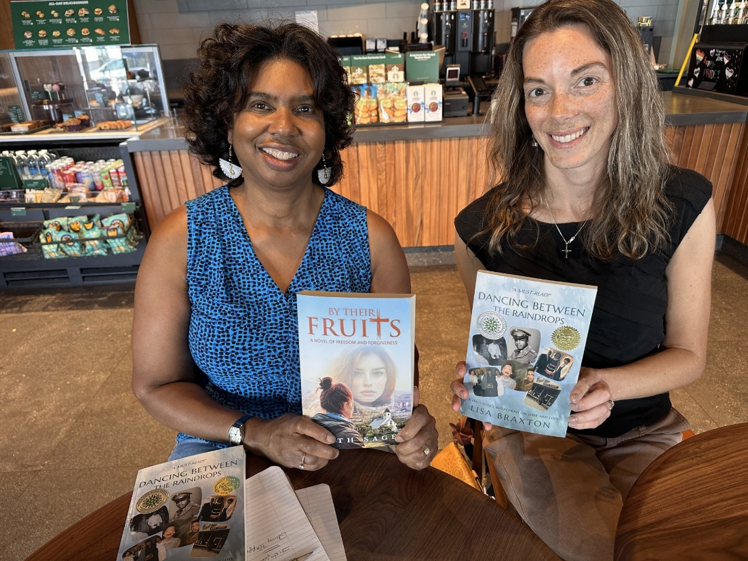
Book Swap: Beth Sage and I traded books and notes on publishing adventures
Beth is a truth-seeker who spent 35 years in a high-control religious group before courageously investigating allegations of abuse that divided her community. She is passionate about biblical discourse and empowering others to grow in their faith. Her debut novel emerges from her commitment to uncovering truth and honoring her relationship with God. Unlike recent memoirs that exam the writer’s remarkable experience in conservative patriarchal American Christianity—think of The Exvangelicals: Loving, Living, and Leaving the White Evangelical Church, The Woman They Wanted: Shattering the Illusion of the Good Christian Wife, and Awake: A Memoir, Beth’s book is a work of fiction. She interviewed 21 people, still part of the ministry she is in and others who have left it, as well as current and former elders. It is a gripping Christian novel inspired by real events.
“I changed all the names and places because I wanted to protect the anonymity of those who were hurt and also the family members of those who perpetrated the abuse,” she told me over coffees at Starbucks.
“At first, I didn’t know if this book was going to document a great movement in church history or if it was going to be a cautionary tale. Until I talked to enough people, I couldn’t be neutral any longer.”
The main character is Victoria. For years, Victoria devoted herself to The Ministry—a global religious organization where obedience is holiness and questioning is sin. When leadership suddenly rejects her without explanation, she’s forced to confront the cracks in the foundation she built her life upon. As rumors of spiritual abuse begin to surface, Victoria does what she’s been trained to do: defend the institution. But listening to survivors, uncovering hidden evidence, and reconnecting with those who left, forces an impossible choice—protect The Ministry’s reputation, or face the truth about the men she’s trusted most.
By Their Fruits is resonating with readers. It is a number 1 bestseller in women’s religious fiction on Amazon and is getting great reviews. Check out her Instagram feed, beth_sage_author, for “Holy Red Flags,” what to look for if you suspect a religious organization is controlling or uses cult-like techniques for control.
Through the story of Victoria, Beth hopes the reader receives a clear message. “God can meet you in any circumstance. He will guide you. But too often we look to the people around us and their faith to carry us.”



 and secure my domain name. I already had LisaBraxton.com—that’ the domain for this website—but I didn’t have “dot org” or the domain name that is the working title of my manuscript. I did what the book said, stopped what I was doing, and secured the other domain names.
 Distance Romance,” about how I met my husband in the most unlikely place. The story was published in
  honorable mention in its 84th annual writing competition. The mention was for an essay I wrote centering on a troubling medical diagnosis I received.
 I had sent an essay I titled, “The World I Didn’t Know Existed,” to
  eye of William Shakespeare, Jane Austen, Sherlock Holmes, Oscar Wilde, or any of the other literary action figures on the market. My favorite is Jane Austen, one of the greatest English novelists. Despite living a largely sheltered life, she skillfully captured the subtleties of human interaction and her works are more popular than ever.
 noise. They have a comfortable over-ear design and sliding headband to fit any head size. They can block out barking dogs, howling cats, annoying spouses, and anyone and anything else that can break a writer’s concentration.
 ubiquitous slot machines too distracting, but a weekend stay at a hotel can give a writer the space and tranquility needed to increase that daily word count. And when the writer needs a breather, there’s always the hotel pool or gym.
 for an extended stay and their lighting is not set up with the writer in mind. When I get the urge to write on these occasions, the dim lighting in the guest bedroom leads to frustration. I sometimes end up writing in the guest bathroom, which, for some reason, people tend to light more brightly. The rechargeable booklight takes care of this issue. It attaches to almost anything, and provides bright, white light.
 end can leave a writer’s back muscles tired. What better way to relieve the tension than with the gift of a massage. Day spas provide gift cards for a menu of massages, including deep tissue and heated stone.
 The writer gets out of the house to craft that story, all the while tapping into the energy of the coffee house patrons and inhaling the full-bodied aroma of a cup of java.

